I think one of the most interesting things about crypto is how there are two sides of a coin that absolutely hate each. On the one hand you have the crypto/NFT maxi’s who think the cure for humanities ails lies on the blockchain. Somehow the panacea to your problems will be resolved through a high tech ledger solution that just makes life better. On the other end you have anti crypto/regulation bros who make some very good points about the need for regulations in the crypto/NFT space but go as far as saying that crypto blockchain technology will never ever be of any use, is a complete large scale grift and serves no purpose other than to launder money.
Both sides have some truth to them and usually neither side can see that the other has some valid points. The truth of the matter is that NFTs are not going anywhere and in fact will only rise in popularity as their use cases become more easily implemented as the blockchains they are carried on evolve. At the same time regulations need to be implemented to prevent laundering of money and cash grabs that are just vacuous promises of a new future covered in promises of community and transparency. If you spend enough time in the NFT space you will no doubt see that many founders of NFT projects tend to develop a politician like cult of personality around them that their followers are all too readily and eager to support.
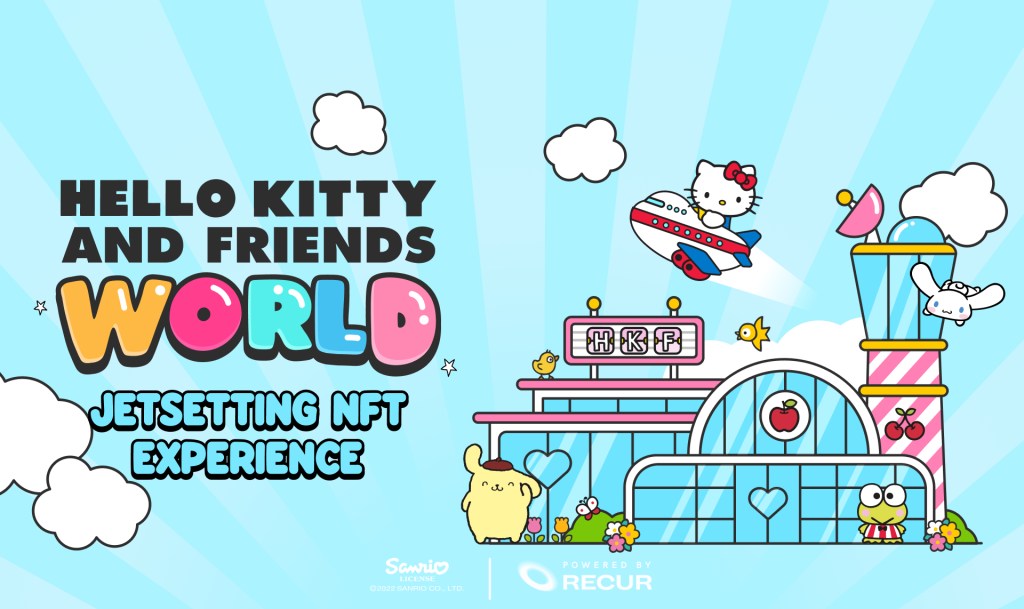
I know this blog has so far been about Hello Kitty NFTs and eventually I am going to write about other projects, blockchains and cryptos but for now I write about Hello Kitty because I’m so invested in it from both a financial and NFT lover perspective that I can’t help but keep larping on about it. What’s great about Hello Kitty is that it is a good test case, like Nike, of established brands that already have a recognizable name but want to enter Web 3 and monetize the experience while at the same time community members are able to monetize their experiences in some way. After all the whole point of Web 3 is to be able to control your own data and experiences and be able to collaborate with rather then be dictated and monetized entirely by established corporations. With Nike or Hello Kitty an NFT holder does not own the commercial rights to the NFT like BAYC holders do but they do get to partake in an exclusive community experience that will allow perks non holders won’t initially have access to. Web 3 will manifest to different degrees but it will be or should be a much more inclusive experience that allows the verification of involvement and loyalty. Being able to verify that someone is a member of a fan club or home owners association or car club or sneaker club or school district etc has far reaching implications. For both good and bad. NFTs are a tool that can be used to create inclusive communities or to create walls.
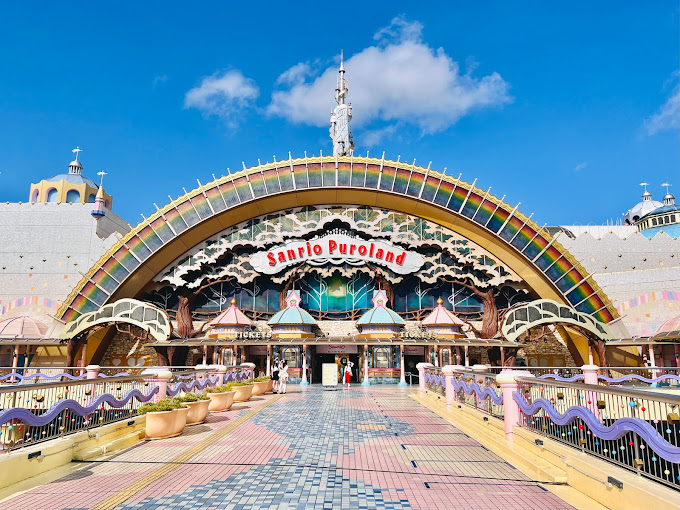
Imagine you visit Sanrio Puroland in Tama Japan. You scan your ticket at the entrance and as soon as you do you get airdropped an NFT into your wallet. It shows time and date you went and it indicates to anyone you’d like to show it to that you actually went there. Why would anyone care? Well many reasons. For one Sanrio might reward people who are true lovers of the Sanrio Universe by giving such members exclusive perks if and only if they can prove they are fans. One way is to show that you actually visited Puroland. Maybe if you have an exclusive HK NFT, say from the original collection drop from 2022, that you qualify for an exclusive NFT drop in addition to the proof of attendance NFT you got when you first entered the park. This other exclusive NFT might be a collectors item and you can resell it for a profit or its a key to be able to command discounts on Sanrio merchandise both within the park and worldwide forever or a set period of time. It also allows you to be part of a minority and exclusive subset community that holds that NFT. The NFT could be burned inside a Web 3 metaverse like game to be able to acquire a special character or weapon or it could be redeemed directly for an exclusive physical item available only to such holders which you can then keep or resell to other collectors.
The whole point is that your experiences are documented without question and therefore you who own such NFTS have done what you said you did because its all on blockchain and if the blockchain is truly immutable and public then it can be verified. The value of NFTs will be derived in part by the prestige and benefits of owning them. People are more likely to spend money and generate positive coverage of your brand if they feel they are being appreciated by being loyal members and that their loyalty can be proven.
NFT collection size is not really that important. What I mean is that you can have 10 million Sanrio NFTs dropped every year but not all of them will be of equal rarity or give the same benefits or even be of the same collection. You can have subsets of exclusive communities within larger general communities but all function within the same universe. In the example given above about Puroland you could have a wallet of dozens of Sanrio general NFTs you got for visiting a HK cafe or buying a Kuromi pencil case in Little Tokyo Los Angeles Sanrio official store or buying an inexpensive NFT dropped by a collaboration by a well known manga artist and Sanrio. This same wallet would also contain an original Sanrio HK NFT, the first Sanrio drop ever, as well. Let’s say that the year is 2025 and your original HK NFT is worth $2000 dollars. This would make it an exclusive NFT among your collection of general NFTs from the cafe, pencil case and artist collab examples above. You belong to both the general community and the exclusive subset community at the same time and without diluting each other. I’m not sure why people don’t get this at all.
One other aspect about NFTs that is just barely getting recognized but will become more apparent over time is staking. Staking your NFT for rewards is going to be such a massive way of getting people to come to your website, game, fashion show, performance etc. Staking doesn’t have to be an online only experience. It could manifest in many physical and digital only experiences as well as combination. Staking could be for an a few minutes, hours, days, weeks or longer. If you visit a HK cafe for example and order something to go you might get a little NFT reward stamp that says you went to visit a HK cafe. However if Sanrio notices that perhaps they would like their seats to be fully occupied during slow periods they might provide discounts to people who sit down at their cafes for at least 45 minutes after their order is ready and make the cafe look busier than it normally would. When you do so you scan in your current HK NFT at the cafe entrance and then scan it again when you leave to earn a special NFT or reward for staking yourself and your NFT. In fact many restaurants may do this to spruce up business during slow periods. Anyone who has every walked by a restaurant that is full and thus seems vibrant is more likely to go inside and try it out to see what the hub bub is all about. People like to be part of what looks cool and happening.
Gaming companies will be a huge massive onboarding avenue into Web 3 gaming but it will take years due to technical, legal and monetary obstacles. Nevertheless NFTs will play a huge part in gaming experiences that will provide its own value added market for both the players and the gaming platforms and vested stakeholders. Imagine the year is 2025 and Nike has finally been able to work out the kinks with game publishers to be able to transfer Nike NFT assets onto any number of compatible blockchain game titles. You’re able to use our Nike NFTs in these game titles to have special perks like skins, weapons, power ups, exclusive ingame drops and more. In addition the game publisher knows that the longer you keep your Nike assets on their platform the more likely it is you will stay longer and play longer and thus increase the chance that you might open up your own wallet and spend money. So they tell you that if you stake your Nike NFT on their platform you will be able to earn ingame tokens or exclusive drops that you can keep or resell. Maybe due to regulations you can’t sell the tokens but you can use them to trade in for exclusive merch that you can resell to other players and then buy ingame NFTs that you can then export onto the blockchain and resell on Open Sea or other marketplace.
Game publishers who have a new game might entice new players to spend more hours on the game then they normally would by telling people that the first 10,000 players who stake their NFTs from, say, BAYC or Hello Kitty or Nike will get exclusive skins and weapons not available through any other means. This would be a great way for players to try out your game. The publisher might say that you have to play at least 40 hours or reach a certain level before you can get your reward so as to prevent people who quick stake.
There will also be use cases for NFT rentals to qualify for drops or exclusive merchandise or discounts. For example imagine that in 2025 a gaming publisher licenses the HK ip to incorporate it into its game. Suppose that the game is crazy popular and it offers alternative ways to acquire abilities, rewards or chances to win rewards. For example you can outright buy an expensive skin that allows you to a great advantage in game. You can also satisfy complex conditions in game that would allow you to access an exclusive reward but of course many people won’t be able or want to be able to do this. A third option is to spend ingame currency but it might be prohibitively expensive or time consuming to collect the ingame currency or buy it outright. A fourth option could involve staking. In this scenario the game publisher might say “Hey by the way if you own an original NFT from the Hello Kitty collection, we’ll give you a short cut to win that exclusive reward”. Staking the NFT might allow you to get a 50 to 90% reduction in the cost to buy the reward or lower the requirements to win it or give you an exclusive ability that allows you to more easily acquire the desired ingame reward. However let’s supose that the floor price for an HK original NFT in the year 2025 is $2000 dollars. You don’t want to spend that kind of money just to get an item from a game, even if it is a game you love. So instead you go to an NFT marketplace and you see that there are holders who are offering their HK’s to the entire world for rent for essentially one time uses. In your case you just need it to qualify for the shortcut to the ingame reward. You remember that the game publisher didn’t indicate which character from the collection so long as it was from the original collection. (Other game publishers might be picky and say ONLY Hello Kitty NFTs from the original collection may qualify for staking). You sort the available NFT rentals from lowest price and find a lessor NFT holder who is willing to lend you his or her HK original NFT for 1 dollar for instantaneous and or within 24 hours. The NFT is never taken anymore but rather when you rent it and then connect to your gaming platform the gaming platform only verifies that the NFT is authentic and that it is associated with your account and then access to the short cut is given to you. The NFT owner can most likely simultaneously rent out his NFT to multiple people at the same time day in day out so that he or she can develop multiple streams of income without actually having to transfer the NFT himself. Everything will be automatic. Even if it took you 10 tries to get the ingame item you wanted, it would have only cost you 10 dollars to acquire it whereas you still saved loads of time and money. Some NFTs might rent for pennies because they will make their money on volume.
Game publishers will also capitalize on the NFT rental market too with their own NFTS. Suppose a sequel to a blockchain game comes out and the game publisher says that certain exclusive and no longer made NFT from the first game will be required to be staked into the second game to be able to access certain special weapons or features. The game publisher might have an inhouse rental market that allows owners of NFTs from the first game to renta them out to players who want exclusive rewards from the second release title. The game publisher can charge a 5% transaction fee on every rental. If the perks for the second game are not guaranteed when you stake the NFT but rather gives you probabilties to win this means that a player might have to rent out an NFT from the first game several times before they can get the exclusive reward in the second. The other way is to grind and grind hard and long.
If players are impatient they might rather rent a first gen NFT for 5 cents each try or time for a 100 times and spend the 5 bucks (despite the time effort) to get the second release reward. The NFT holder might be simultaneously renting out his NFT dozens or hundreds of times per day and make a tidy little profit on the side while the game publisher makes a nice 5% rake on it all.
The possibilities for NFT use cases extend well beyond just collecting pretty pictures. Yes collectors of pretty pictures will eventually drive prices up too but the real value add is utilizing the technology underneath NFTs that allow it to be not only a collectible but also a tool, a key, to access other things while simultaneously recording every transaction and action on an immutable ledger. It’s really versatile technology that we have hardly seen, if at all.
2023 is a shit show for sure and nothing will clear up until 2024 and even then at the very earliest summer of 2024. The effects of regulation, the bear market and brands taking a tip toe approach towards NFTs can make one feel frustrated. Floors dropping, Web 3 companies not communicating with their active community members, rugs and scams still occurring on the daily, regulations that seemingly make it difficult for crypto blockchain to grow (Regulations actually help, not hinder believe it or not). It all looks like the end of the world now and sentiment is absolutely in the dumps. There’s no denying that many Web 3 projects over extended themselves and they had to shut down or shut down multiple projects down in order to focus resources on revenue generating endeavors. It’s only natural this happens and unfortunately people who thought the NFT bull market would last forever and that the NFT market would not be affected by falling prices and interest clearly didn’t realize that Web 3 startup promises go out the window when markets tank. Promises are made on the premise that market conditions at the time promises are made continue into the future. If the market changes then the promises have to change too. What was viable before is no longer viable now and there’s nothing you can do about it because extenuating circumstances have forced changes.
As I mentioned in previous posts I expect, barring regulatory obstacles of major proportions, the HK snapshot wrapping event to occur in either July, August or September. Recur has been slowly pulling back on their own managed experiences as either the brands are not moving along as fast as Recur expected them to due to market sentiment and cost considerations or Recur has realized that managing and moving the experiences along requires putting in resources in investments that they will never get back. You need people to manage each experience and that costs money and that money could be redirected into focusing on Recur builder which is where the money is at because they get paid to consult brands rather then manage the experience themselves.
Having said this what I love about Sanrio is that they still are plowing into Web 3 via NFTs and metaverse initiatives. Like that Hong Kong metaverse display in association with MetaGaia. If Sanrio had completely abandoned Web 3 they would not make this localized events. They are testing the market constantly for feedback so that they know if they market has changed and if so in what way so that they can conform to expectations. Sanrio is the only IP that Recur works with that is still actively, in the background, making inroads into Web 3. Sanrio is very much active in the Web 3 space but quietly and steathily. It is building partnerships and this behavior is inline overall with Japans strategy of making NFTs a viable soft power avenue to the rest of the world.
I am extremely positive on Sanrio. They’re behavior in the Web 3 space is active and forward looking. On the Recur side of things I’m glad that we even go to the snapshots. I was wondering when those would ever happen and in April of 2023 the event suddenly became active. Now the next step, the wrapping, is the final stage of the first drop challenge. This is where we see how dynamic wrapping will affect the NFTs and how they will affect their rarity and how they will affect them visually if at all. There are a lot of “ifs” for dynamic wrapping but its all very exciting. Furthermore the start of the wrapping brings us closer to the start of the second challenge. Hopefully this continues along the same lines as the first challenge where we get to visit new cities, collect new stamps and redeem these stamps for new exclusive snapshots to wrap.
You might be saying “Oh thats so boring” and it might be but while these challenges are happening sentiment in NFTs will slowly but surely turn positive again in preparation for the next bull run in mid 2024 (imo). New collectors will come in, Sanrio will most likely entry in force with phygital drops and more NFT collabs and partnerships, and the original NFT collection as well as snapshots will likely increase in value again.
Regardless of what you think about Recur, whether they have put HK on hold or whether Sanrio has put HK NFTs on hold for the time being the fact of the matter is long term the collection has a bright future since NFTs have a bright future. I believe the collection has lots of value and appeal towards collectors initially and eventually towards other use cases I mentioned above. Two years from now you will see NFTs be fully embraced by the world. Take a leap of faith.
 MetaParcel.com